

The artists of this exhibition, Huang Qi-Xuan and Tsai Jia-Yin, are graduates of the Graduate Institute of Architecture and Community Design at Tainan National University of the Arts and were classmates during their graduate studies. Tsai Jia-Yin’s primary research focus is community planning and design as well as long-term community engagement, while Huang Qi-Xuan concentrates on the development of art education for children and the elderly. During their graduate studies, they adopted “learning by doing” as a core approach, conducting qualitative research through community building and children’s art. Their work spans a wide range of age groups, from elementary school students to community elders, with both artists involved throughout the entire process—from proposal and implementation to observation and review. Sharing a common background in architecture led them onto the path of public art. Carrying youthful energy and a shared belief in “making art a part of everyday life,” they co-founded “Lutsao Design Studio” (now renamed Pengzi Art Studio) after graduating in 2012, with the goal and philosophy of creating “works with warmth.” Upholding this理念 in public art and community participation, they strive to ensure that people are actively involved in their works and can gain a sense of accomplishment through participation. Returning to a pure and simple essence, their expertise in outdoor sculpture and participatory public art often employs clay modeling and mosaic collage, presenting a rustic childlike quality infused with delicate emotions—warm and unpretentious.
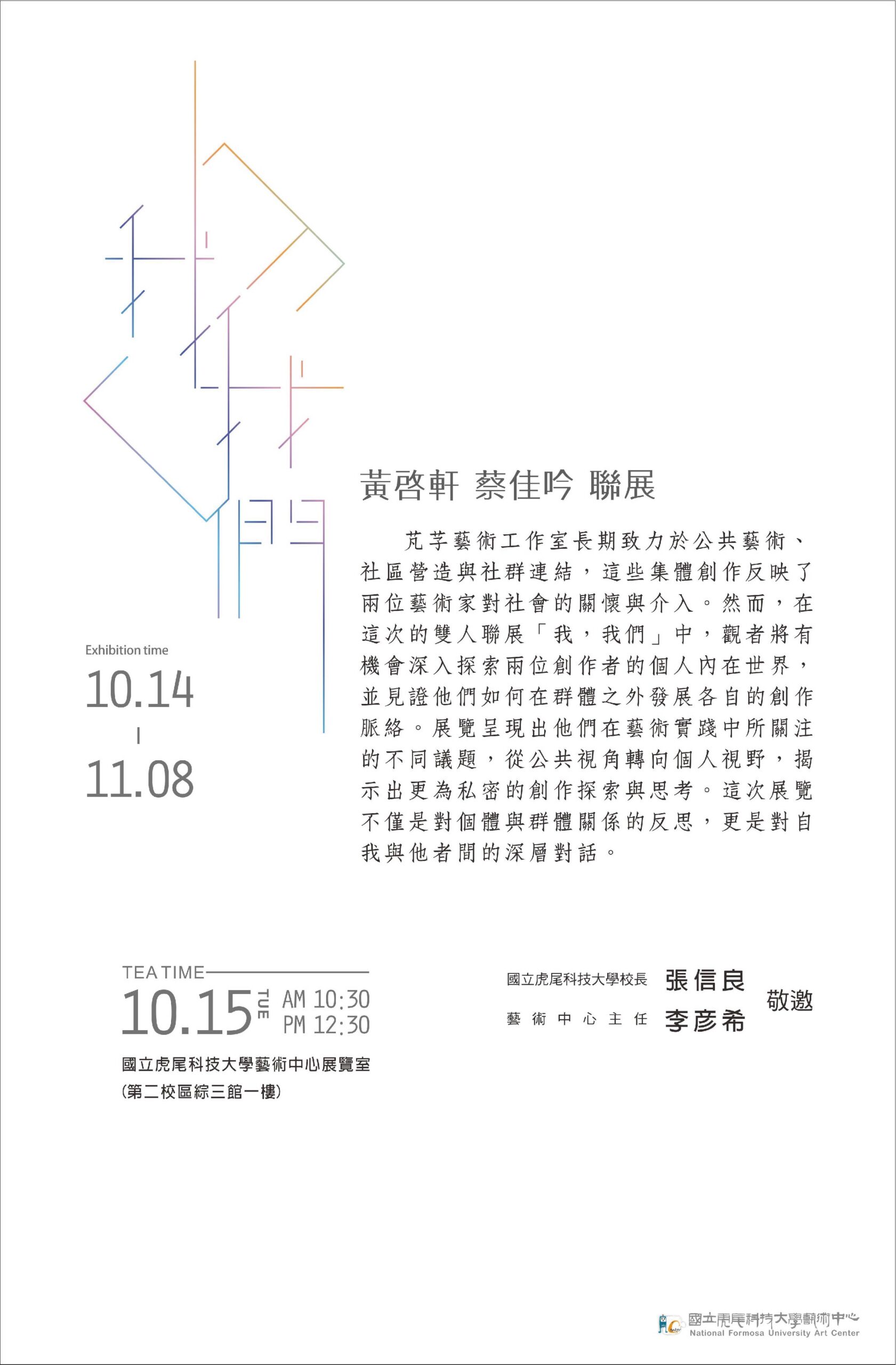
In this joint exhibition, “Me, We,” the artists present how they have developed their individual creative trajectories outside the collective, revealing the different issues they focus on in their artistic practices. Shifting from a public perspective to a more personal viewpoint, the exhibition unveils more intimate explorations and reflections in their creative processes. This exhibition is not only a reflection on the relationship between the individual and the collective, but also a profound dialogue between the self and others.